Any aspiring authors reading my blog?
Check out the cool contest over at Shooting Stars. Lots of cool giveaways and a great writer's resource page.
Saturday, March 13, 2010


Friday, March 12, 2010
Good Reads
I was killing time on Good Reads - updating my book lists - like I don't have anything else to do...when I typed in my own name...
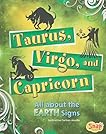 Taurus, Virgo, and Capricorn: All About the Earth Signs by Kristine Carlson Asselin
My rating: 5 of 5 stars
How cool is it that my own book is on Good Reads? Happy!!
View all my reviews >>
Taurus, Virgo, and Capricorn: All About the Earth Signs by Kristine Carlson AsselinMy rating: 5 of 5 stars
How cool is it that my own book is on Good Reads? Happy!!
View all my reviews >>
Write Nonfiction for Kids? Break Out With a High-Concept Idea: Interview with Carla Killough McClafferty
I just wanted to pass along this great interview on Darcy Patterson's website with Carla Killough, writer of high-concept non-fiction. I'm inspired.
Write Nonfiction for Kids? Break Out With a High-Concept Idea: Interview with Carla Killough McClafferty
Write Nonfiction for Kids? Break Out With a High-Concept Idea: Interview with Carla Killough McClafferty
Thursday, March 11, 2010
From Footnoting to Final Draft.
Not surprising, even the most basic non-fiction title requires a fair amount of research. I’ve had to pull out 20-year-old memories of footnoting (Google APA style and you’ll get lots of hits for proper notation), and citing resources. The editor will need to verify your sources and fact check your research. Even fiction requires some degree of research, but that could be as simple as an afternoon of observing teenagers at an arcade. I might use some of my astronomy research for my novel. Anyone else have any tidbits about research for fiction?
I've found a wonderful website that helps me organize my resources. Worldcat.org has a huge database of libraries and books. I usually type in some key words and start getting hits of books I want to use – I like to use the most recently published adult resources I can find – using other children’s books as resources is a no-no. I find the books I want to use – tag them in a list – and then export it into a bibliography. I can request the books I like from my local library – saves time and energy. Very cool.
Depending on the topic, you might reach out to experts in the field. You can footnote an email – just make sure you save it!
Word has a great footnoting tool – lots easier than it was “back in the day.” My 2000 word manuscripts often have upwards of 50-60 footnotes. Not sure if that’s excessive or not, but it is what it is. I like to make sure my sources are properly cited – Anything that isn’t commonly known should be cited.
Researching aside, the biggest difference I’ve found is my ability to generate word count. Three hours of dedicated writing fiction can sprout between 1500-2000 words for me. I’m lucky to get 200 words of non-fiction writing in the same amount of time. It’s mostly because I’m checking sources, footnoting, double checking sources, and trying to filter complex concepts into the grade level for which I’m writing.
It’s exasperating to spend hours on the project and only generate a couple hundred words, but it’s rewarding to “hit submit” and get the project done!
Subscribe to:
Posts (Atom)